If you’re managing a facility where temperature-sensitive products are part of your business, food, pharmaceuticals, or chemicals, then you know how quickly things can go wrong without the right cooling infrastructure in place. Industrial refrigeration services are not a luxury. They’re the backbone of reliability, safety, and operational efficiency. When your cold storage fails, you don’t lose equipment; you lose inventory, production time, and revenue. And in some cases, the trust of your customers. This is where knowing what’s included in proper commercial cooling solutions makes all the difference.
What Do Industrial Refrigeration Services Include?
Industrial refrigeration services cover the entire lifecycle of large-scale cooling systems. That means system design, installation, preventative maintenance, repairs on industrial cooling units, optimization, retrofits, and cold storage solutions. These systems are far more robust than anything used in residential or small commercial spaces. They’re engineered to cool massive areas, control specific temperature zones, and run non-stop in demanding environments like warehouses, food processing plants, distribution centres, breweries, and pharmaceutical storage.
Unlike standard HVAC contractors, industrial refrigeration specialists understand that every degree matters. If a cold room goes from -18°C to -14°C during peak production, entire shipments of perishable goods can be deemed unfit for sale. That kind of risk can’t be left to guesswork or generalized service.
Why Are Industrial Refrigeration Services So Critical for Operations?
It’s not just about keeping food cold. The stakes are high. These systems are integral to food safety compliance, pharmaceutical integrity, energy cost management, and business continuity. When a compressor fails, or refrigerant levels drop, or coils freeze, your entire supply chain is on the line. Industrial refrigeration services are designed to prevent these high-impact issues through system reliability, early detection, and rapid response.
For example, in Canada, industrial operators must comply with CFIA and Health Canada regulations. Cold Fuel ensures that our systems meet every requirement, from accurate temperature controls to proper insulation, refrigerant use, and environmental considerations.
Industrial Refrigeration System Installation Done Right
Installation isn’t just about placing the equipment. It’s about designing the right system from the ground up based on your square footage, thermal load, type of product, production flow, and future expansion plans. Whether you’re setting up blast chillers for a poultry processing line or walk-in freezers for a frozen foods warehouse, the wrong setup can be disastrous.
Here’s what proper installation really looks like:
Load Calculation and Site Assessment
Every facility has a unique cooling demand. We calculate cooling loads based on ceiling height, insulation quality, door frequency, ambient temperature fluctuations, and thermal load from machinery or lighting.
Custom Equipment Selection
We don’t just throw in what’s available. We match your needs with the right compressors, condensers, evaporators, control panels, and refrigerants. Whether it’s an ammonia system for large-scale food production or a CO2 setup for a dairy plant, every part is matched to your exact operational needs.

Smart Layout Planning
How the system is placed affects airflow, service access, and energy efficiency. Improper placement can lead to hot spots, airflow issues, and service delays.
Control System Integration
Advanced control panels and sensors manage temperature, pressure, humidity, and defrost cycles. These should integrate with your building automation system for real-time monitoring.
Commissioning and Testing
Once installed, every system goes through a full commissioning phase where performance is tested under load. Temperatures, pressures, valve response times, and alarms are all tested before the system is officially handed over.
Commercial Refrigeration System Maintenance: Your Long-Term Safety Net
A properly installed system still needs ongoing maintenance. Without it, efficiency drops, energy bills spike, and unexpected breakdowns become routine. Maintenance isn’t just a checkbox. It’s a survival strategy.
What’s In a Typical Preventive Refrigeration Maintenance Routine?
- Coil cleaning to maintain proper heat exchange
- Checking refrigerant levels and topping up if necessary
- Compressor oil changes and vibration tests
- Evaporator inspection and defrost system checks
- Testing safety switches and control responsiveness
- Leak detection using electronic sniffers and pressure readings
- Drain line clearing to prevent blockages and overflow
Without preventive service on industrial refrigeration, a simple clogged filter can push compressor amps up and blow a motor. Or a silent leak can slowly reduce efficiency until your freezer can’t reach the right temperature. Many clients only call when there’s a shutdown. But the best refrigeration facilities budget for quarterly or bi-annual servicing, it saves far more than it costs.

Cold Storage Solutions That Match Your Business Model
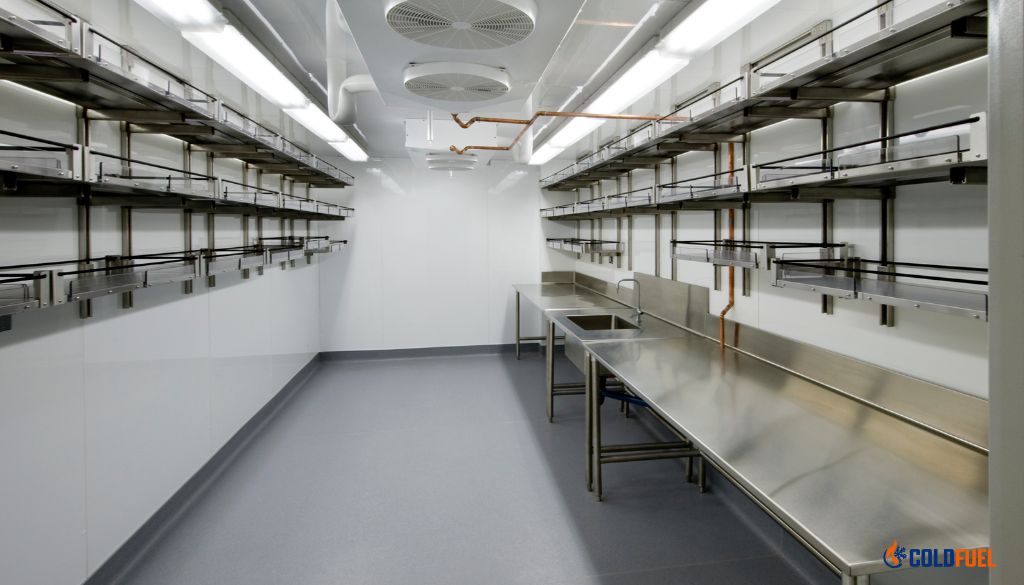
No two facilities need the same kind of cold storage. A meat distributor isn’t going to have the same layout as a beverage warehouse or a medical-grade storage facility. That’s why real industrial refrigeration services offer more than just system supply, they offer customized cold storage designs.
Types of Cold Storage Setups We Work With
- Walk-in freezers and coolers sized for pallet storage
- Blast freezers for fast temperature drop in food processing
- Spiral freezers for products that require gentle freezing over time
- Dual-temperature zones for operations with multiple storage needs
- Refrigerated docks for shipping and receiving
Each setup also comes with considerations like forklift access, floor heating systems to prevent frost heave, insulated doors, and backup generators. When designing these systems, we also factor in your daily volume, shift changes, loading habits, and airflow patterns.
Common Industrial Refrigeration Issues and How to Prevent Them
You’d be surprised how many facilities run on half-functioning refrigeration and just deal with it. Some of the most common issues we fix include:
Inconsistent Temperatures
Usually caused by faulty thermostats, frozen coils, or improper defrost cycles. These result in inventory that doesn’t stay consistently frozen or cooled.
Short Cycling
This means your compressor turns on and off too often. It’s hard on the unit and often signals electrical issues, improper refrigerant levels, or faulty control boards.
Refrigerant Leaks
Not only do these harm the environment, but they also reduce system performance. Leaks are common in older systems and must be caught early using proper electronic detection.
Frozen Evaporator Coils
Often due to low airflow or defrost malfunction. This can result in shutdowns and temperature swings.
Compressor Failure
The most expensive and critical component. Without it, your system can’t function. Compressor issues often come from skipped maintenance or overload due to dirty coils or clogged filters.

Emergency Industrial Cooling Repair Services When It Matters Most
When a refrigeration system fails, time is not on your side. Emergency industrial refrigeration repair means fast diagnosis, access to critical parts, and the ability to stabilize your system until full repair is complete.
We stock key parts and components on-hand, motors, fans, sensors, relays, pressure switches, compressors, so that when you call, we’re not scrambling for inventory. Our service vans are stocked like mini warehouses, allowing most emergency issues to be resolved on the first visit.
In some cases, we deploy temporary cooling solutions such as mobile freezer units to keep your inventory safe while your primary system is under repair.
Upgrades, Retrofits, and Compliance
Regulations are constantly evolving. Refrigerants like R-22 have been phased out due to environmental regulations. Older systems often need to be upgraded for both energy efficiency and legal compliance.
We offer full system retrofits to replace banned refrigerants with newer, low-GWP (global warming potential) options like R-448A or R-744 (CO2). In many cases, these retrofits also reduce your power bill due to improved compressor efficiency.
Upgrades also include:
- Installing variable-speed compressors and fans
- Upgrading control systems for real-time analytics
- Replacing outdated evaporators and condensers
- Adding backup generators and UPS systems for disaster protection
Choosing the Right Industrial Refrigeration Partner
Industrial refrigeration services are more than just mechanical work. They’re a safety net for your products, a pillar of your productivity, and a direct influence on your bottom line. Whether you’re looking for custom cold storage solutions, commercial cooling upgrades, or proactive refrigeration system maintenance, every decision you make should be focused on reliability, compliance, and long-term savings.
When choosing your service provider, make sure they offer more than just technical knowledge. Look for a team that understands your industry, your workflow, and the consequences of system failure. Cold Fuel is here to keep your facility running cold, clean, and confidently.